
Search Arizona Criminal Court Records
Arizona criminal court records are public case files kept by county Superior Courts and local Municipal Courts across the state. All felony cases go to Superior Court, while misdemeanors and city violations are heard in Municipal or Justice Courts. You can search these records online through the state's free Public Access portal or visit courthouses in person. The Arizona Judicial Branch maintains case information from 177 of 184 courts statewide, making it easy to look up criminal records from Superior Courts, Justice Courts, and Municipal Courts throughout Arizona.
Arizona Criminal Court Records Quick Facts
How Arizona Courts Handle Criminal Cases
Arizona has three court levels. Superior Courts handle felonies. Each of the 15 counties runs one Superior Court. These courts also hear serious misdemeanors, civil cases over ten thousand dollars, family law matters, and probate cases. Justice Courts and Municipal Courts process misdemeanor charges. They hear traffic violations. Small claims go here too. City ordinance violations get filed in these lower courts across Arizona. Criminal court records sit at the court where the case was filed. The state runs an integrated system but each court keeps its own files. This decentralized approach means you contact the specific court that handled your case to get records. All felony cases go to Superior Court regardless of which city the crime happened in across the state. If you got charged with a felony in Phoenix, the file sits at Maricopa County Superior Court. Same goes for Tucson cases, which go to Pima County. Felonies never get heard in Municipal Court because those courts lack jurisdiction over serious crimes. Misdemeanor charges go to the Municipal Court in that city. Some counties use Justice Courts for smaller towns and rural areas instead of municipal courts. Apache County has Justice Courts covering the whole county. Maricopa County runs 26 separate Justice Court locations for unincorporated areas and small towns throughout the county to handle misdemeanor cases and traffic violations in areas outside city limits.
The Arizona Supreme Court's Administrative Office of the Courts manages all statewide electronic record systems. This agency built the Public Access to Court Case Information portal that covers 177 courts. They set automation standards. They ensure public access to case records. The main office is at 1501 West Washington Street in Phoenix. Call them at 602-452-3300. The support center number is 602-452-3519. Office hours run Monday through Friday. Staff can help with questions about accessing records or using online portals. They assist with technical issues. If you cannot find a case online, call the support center. They will walk you through the search process or explain why a case might not appear in the database yet. Criminal court records contain case numbers, party names, charges filed, and hearing dates. Minute entries document what happened at each court session. These official records show which judge presided. They list motions that were argued. Court orders get recorded in minute entries. You can view docket information through free online portals. Actual documents require separate requests to the court clerk. Some counties let you download PDFs through the eAccess system for a fee of ten dollars per document which gets charged to your credit card or prepaid account balance.
Free Statewide Case Lookup
Arizona offers free online case searches through the Public Access to Court Case Information portal that covers 177 courts statewide including Superior Courts in all 15 counties plus most Municipal Courts and Justice Courts across the state. No registration is needed to use the system. No fees apply for basic searches. You search by party name or case number and results show case status, scheduled hearings, and minute entries documenting court proceedings. The portal works around the clock so you can access it from any device with internet at any time day or night. Superior Courts participate fully in the system. Most Municipal Courts and Justice Courts are included though a few smaller courts have not yet integrated their records into the statewide database. This free system makes Arizona criminal court records easy to find without visiting a courthouse in person or paying search fees like some other states charge for similar public access to case information maintained by state court systems.
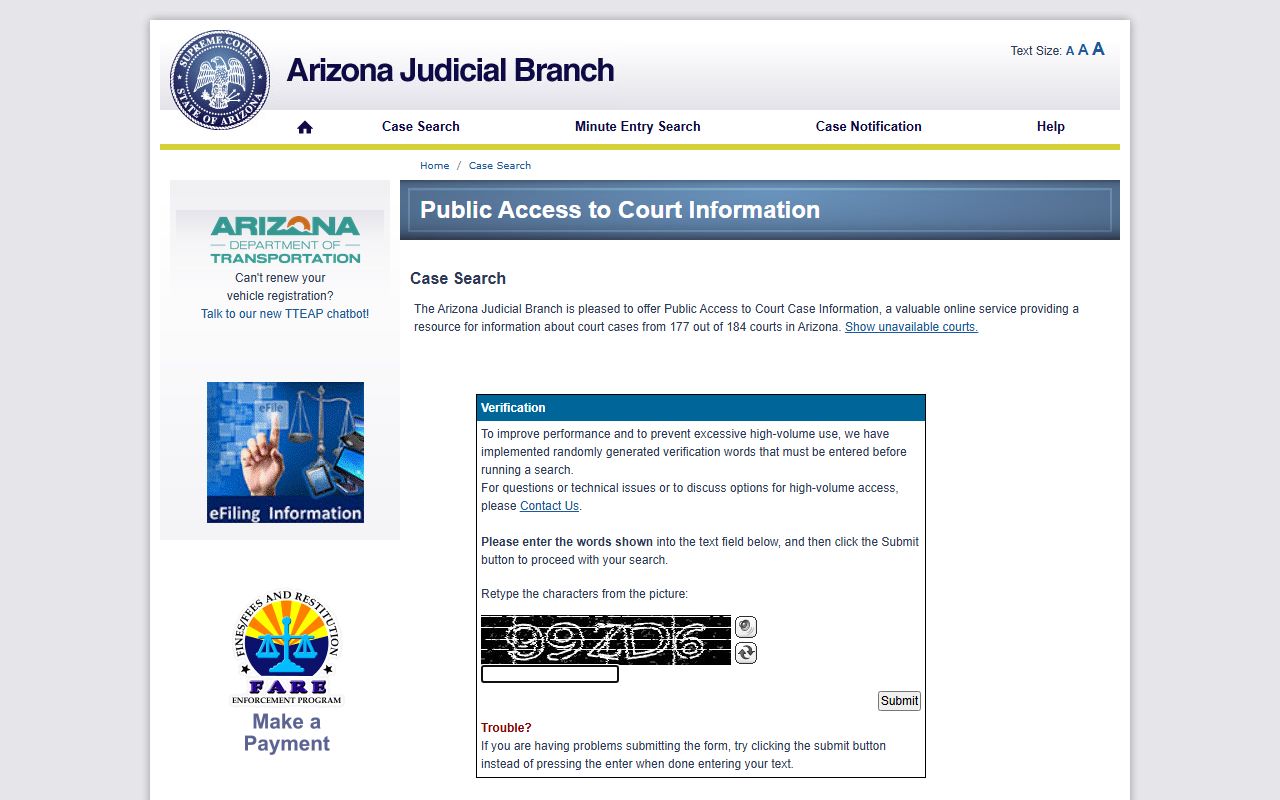
The portal shows non-confidential information only. You see the case number. Case type appears. Court location is listed. Party names show up. Filing dates are visible. Case status gets updated regularly. Upcoming hearings appear in the results. Minute entries from past court sessions can be viewed. This gives enough detail to confirm a case exists and check its current status. The system updates in real time with up to a 24-hour audit delay for accuracy at some courts. Juvenile cases do not appear in search results. Sealed records stay hidden from public view. Mental health cases remain confidential by law. Adoption files are not public records. Most adult criminal cases show up unless a judge specifically ordered them sealed under Arizona statutes.
Search by party name or case number. You can pick a specific court. Date ranges narrow results. Case type filters help too. Name searches work best with the full last name plus first initial. Case numbers must match exact court formatting. Maricopa uses one system. Pima uses another. Each court has its own numbering pattern.
Note: This portal does not include actual documents like complaints or motions.
Getting Copies of Court Documents
Actual documents require the eAccess system. This is a paid service. Each document costs ten dollars. Subscription plans are available. Plans range from 80 dollars to ten thousand dollars monthly. Registration is required. You create an account before ordering. The system lets you download PDF copies of filed documents once you pay. Criminal complaints are available. Answers show up. Motions can be downloaded. Orders appear in the system. Judgments get posted. Sentencing documents are included. Not all courts uploaded full archives. Some counties only have recent years online. Older records may require an in-person courthouse visit to get copies if they have not been scanned into the electronic system yet.
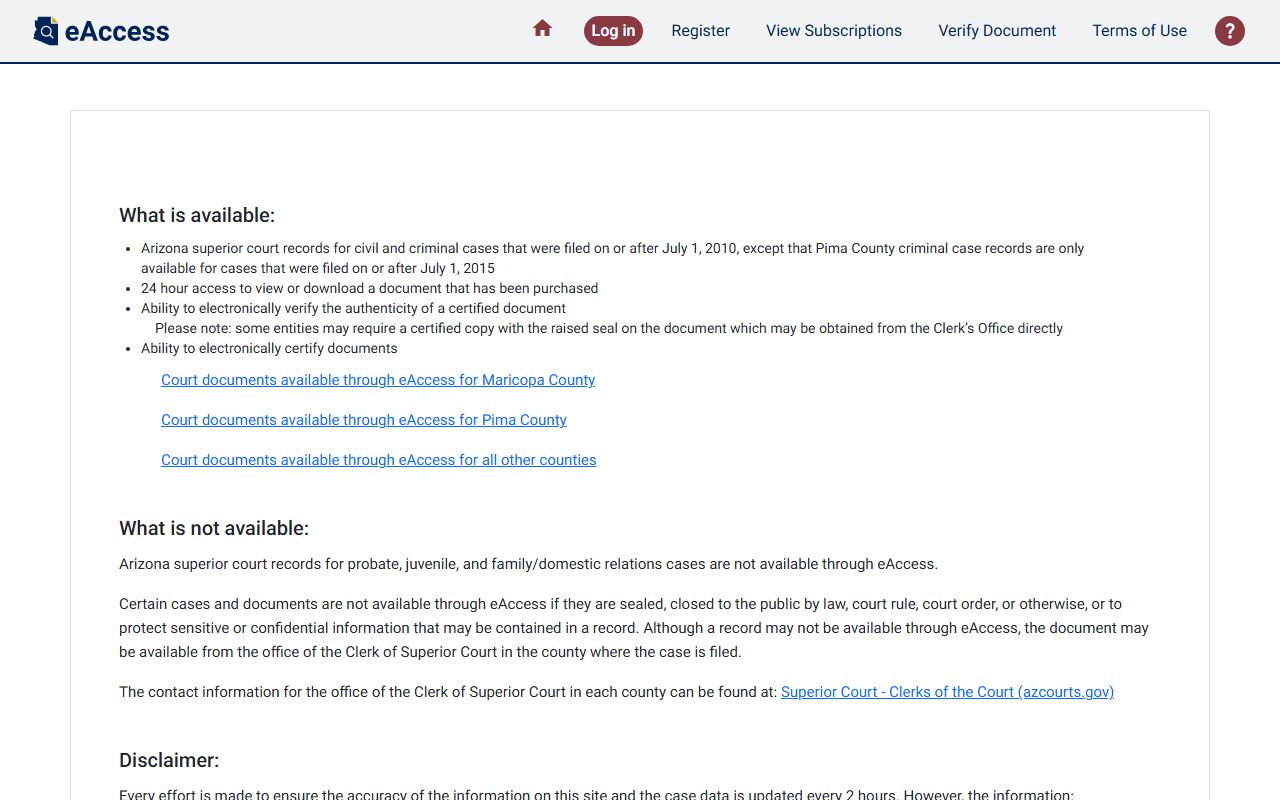
You can get copies directly from each county's Clerk of Superior Court. Visit in person. Submit written requests by mail. Email works in some counties. Fees vary by location but most charge 50 cents per page for regular copies. Certified copies cost 35 dollars per document plus the page fee. Some clerks add research fees if you lack a case number. Maricopa charges 35 dollars per year searched. Pima has similar research fees. Small counties may waive this if the search is simple. Always call ahead to confirm current fees before mailing payment. Fee schedules change periodically.
Processing times vary. Simple requests may take a few days. Complex searches can take two weeks or more. Courts process requests in the order received. Busy courts like Maricopa have longer wait times than rural counties with lighter caseloads.
County Superior Court Records
Each county keeps its own files. The Clerk of Superior Court maintains all records. Criminal files sit here. Civil cases too. Family law matters get filed with this office. Probate cases are stored here. Juvenile records stay at Superior Court. You must contact the specific county where your case was filed to get detailed records or certified copies.
Maricopa County runs the fourth-largest trial court system in the United States. Over 160 judicial officers serve more than 4.7 million residents across the county. The main Clerk office is at 601 West Jackson Street in Phoenix. They offer a free Superior Court Docket search online. This works much like the state Public Access portal. Search by name or case number. View docket entries. Check case status. See upcoming hearings. Minute entries appear in search results. The system covers all criminal cases filed in Maricopa County Superior Court going back many years depending on when electronic records started.
Pima County maintains the Agave Online portal for free searches. Enter the last name. Add a first name if you want. Cases appear in results. Criminal case numbers start with CR in Pima County. After January 1 2009, you need a three-digit defendant number like CR20191234-001 to search. Older cases use simpler formats. The portal shows case information including charges, court dates, and dispositions for felony cases heard in Pima County Superior Court.
Smaller counties use the state Public Access portal. Apache County is on there. Cochise too. Coconino participates. Gila joined. Graham uses it. Greenlee is included. La Paz appears. Mohave posts cases. Navajo participates. Pinal is on the system. Santa Cruz joined. Yavapai uses it. Yuma posts their cases too. Some counties also run email request systems or county-specific portals. Check with your county's Clerk of Superior Court to learn about local options for accessing Arizona criminal court records.
Municipal and Justice Court Records
Municipal Courts hear misdemeanors. They process traffic violations. DUI cases that are not felonies go here. City ordinance violations get filed in Municipal Court. Each city runs its own court with independent operations and separate record systems. Phoenix Municipal Court is the state's largest limited jurisdiction court, processing approximately 160,000 criminal and traffic charges annually at its facility located at 300 West Washington Street in downtown Phoenix where you can call 602-262-6421 for general information about cases and procedures. Other major Arizona cities including Mesa, Chandler, Gilbert, Glendale, Scottsdale, Peoria, Tempe, Surprise, Goodyear, and Buckeye each operate independent Municipal Courts that maintain their own separate case filing systems and records management procedures for misdemeanor criminal charges, traffic citations, and city code violations within their respective jurisdictions so you must contact the specific city court that handled your case rather than going to the county Superior Court for misdemeanor matters. Maricopa County has 26 Justice Courts serving unincorporated areas and small towns throughout the county. Other counties run between one and seven Justice Courts depending on population and how spread out the county is geographically across Arizona which affects how many separate court locations are needed to serve residents.
Tucson City Court handles misdemeanors for Pima County residents. The court is at 103 East Alameda. Fax requests to 520-791-5488. Email TCCRecords@courts.az.gov. They charge a 17-dollar research fee per case. Flagstaff Municipal Court keeps its own files. Casa Grande City Court does too. Yuma Municipal Court maintains separate records from Yuma County Superior Court. Each city court operates independently with its own fees, hours, and procedures for accessing criminal court records in Arizona.
Justice Court searches appear on some county sites. Maricopa Justice Courts have an online search tool. Pima County runs a separate Justice Court search. It covers traffic cases. Misdemeanors show up. DUI cases appear. Small claims are included. Evictions can be found. Felonies do not appear. Juvenile cases stay out of public search results. Check with your local Justice Court to learn about Arizona criminal court records access options.
State Court Administration
The Administrative Office of the Courts helps the Chief Justice. Article VI Section 7 of the Arizona Constitution establishes this role. The AOC builds electronic record systems. They set automation standards. Public access to court information is their responsibility. They maintain the statewide portals.
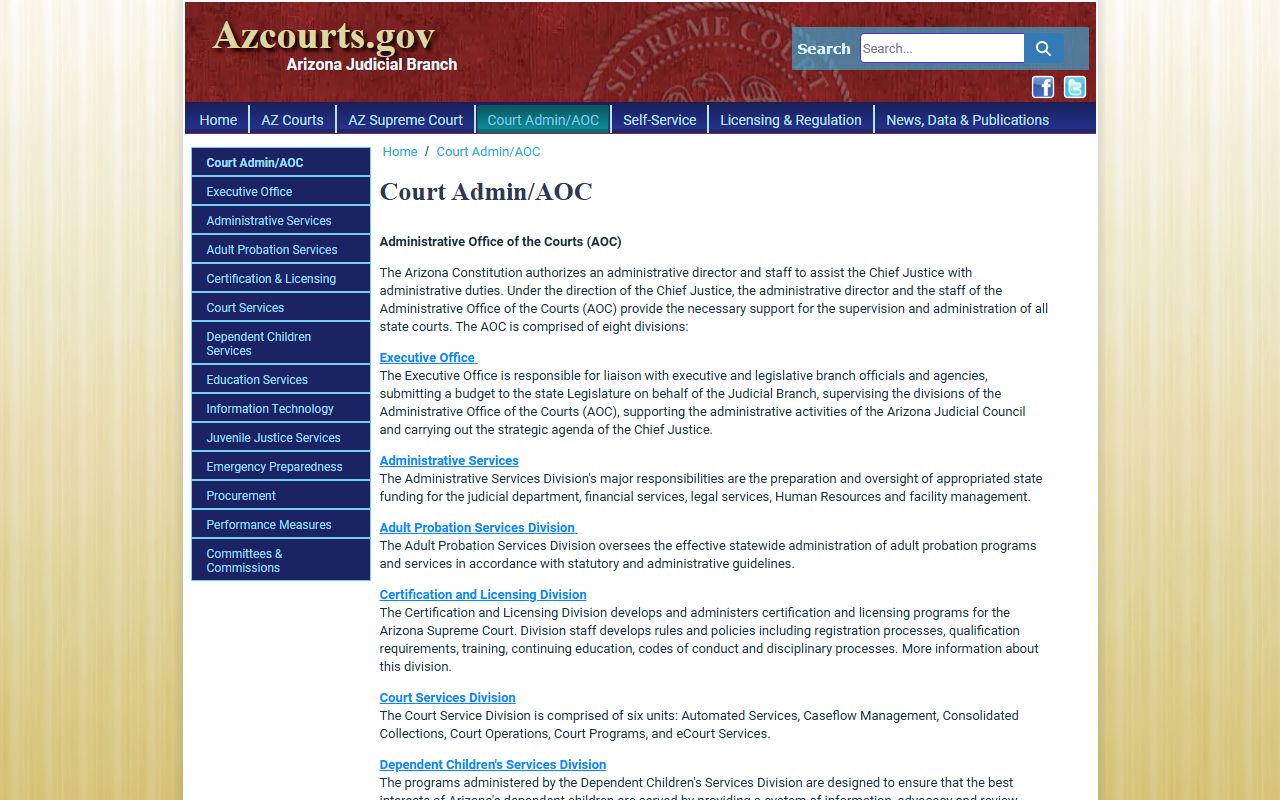
The office is at 1501 West Washington Street Suite 411 in Phoenix AZ 85007. Call 602-452-3300 for the main number. The support center is 602-452-3519. Toll-free is 1-800-720-7743. Hours run Monday through Friday during standard business times. Staff answer questions about court records. They help with the online portals. If you have technical problems searching for Arizona criminal court records, call the support center for assistance.
Arizona Statutes on Court Records
State law controls public access. ARS Section 39-121 is the main statute. It says public records shall be open to inspection by any person during office hours. This applies to court case files. Clerks of Superior Court must allow access. This is Arizona's core public records law for criminal court records.
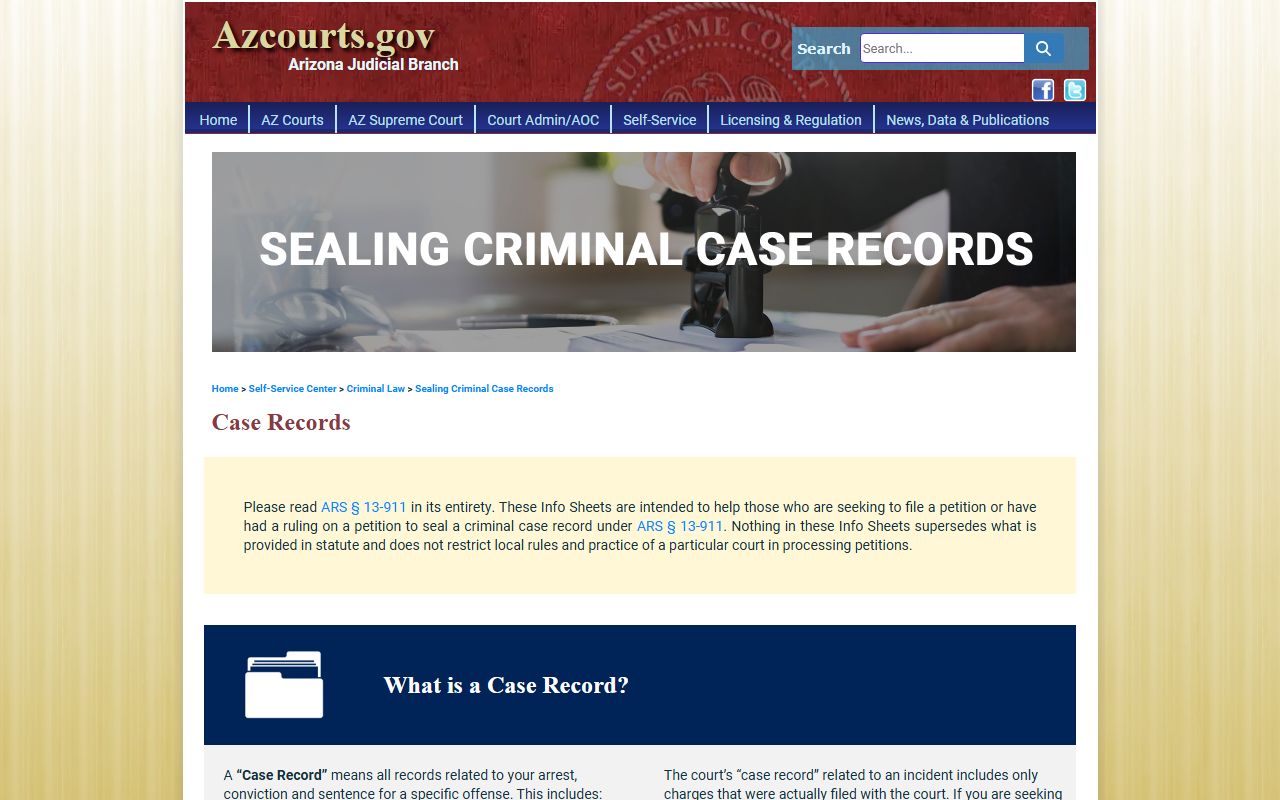
ARS Section 13-911 allows record sealing under certain conditions. The law took effect January 1 2023. Waiting periods vary by offense class. Class 2 and 3 felonies need a ten-year wait. Class 4 through 6 felonies require five years. Class 1 misdemeanors need three years. Class 2 or 3 misdemeanors require two years. After the waiting period ends, you can petition the court to seal your Arizona criminal court records if you meet all other requirements under the statute.
Some offenses cannot be sealed. Dangerous crimes stay public. Sexual offenses remain accessible. DUI cases do not qualify. Crimes involving children cannot be sealed. If your case qualifies and you waited long enough, file a petition with the court that handled your original case. The court schedules a hearing. A judge decides whether to grant sealing. More information appears at the Self-Service Center.
ARS Section 41-1750 creates the DPS records system. The Arizona Department of Public Safety keeps criminal history records. These are arrest records from law enforcement. They are not public. Court case records are different. Court files remain public unless sealed by a judge in Arizona.
Arizona Supreme Court Rule 123 governs access to court files. It sets categories for confidential records. Juvenile cases are automatically confidential. Mental health cases stay sealed. Some adoption records remain private. Other records may be sealed by court order after a hearing. Most adult criminal cases stay open to public inspection unless a judge specifically orders them sealed under Arizona law.
Record Request Fees
Fees vary by county. Most charge 50 cents per page. Certified copies cost 35 dollars per document plus page fees. Some counties add research fees of 35 dollars per year searched if you lack a case number. Shipping runs about eight dollars when mailed.
Maricopa County does not take personal checks. Pay by money order. Debit cards work. Credit cards are accepted. Cash works in person. Electronic replication of a whole case costs 35 dollars. The eAccess system charges ten dollars per document. Monthly subscription plans start at 80 dollars for frequent users who need to access many Arizona criminal court records regularly through the online document retrieval system.
Some counties waive fees in certain situations. Coconino waives fees for Section 8 Housing Authority letter holders. Graham offers free interpreter services. Fee schedules change periodically. Always call the Clerk of Superior Court in your county to confirm current costs before sending payment. This prevents delays caused by underpayment.
Criminal Court Records by County
Each county in Arizona has its own Superior Court Clerk who keeps criminal records. Pick a county below to find local contact info and resources for criminal court records in that area.
Records in Major Arizona Cities
Residents of major cities access felony records through their county Superior Court and misdemeanor records through their local Municipal Court. Pick a city below to learn about criminal court records in that area.